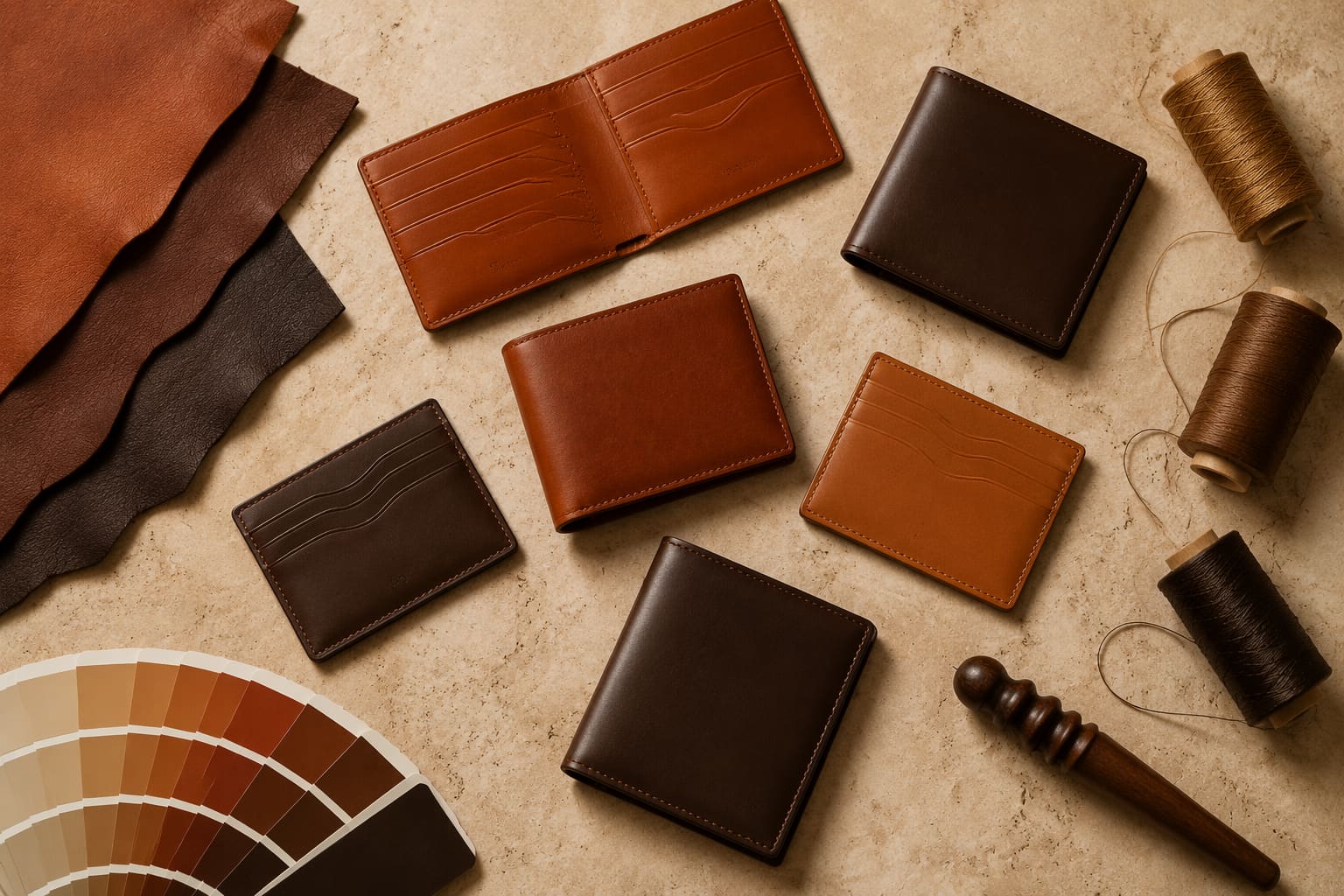
Start with the leather grade, not the price
A promotional card holder, a retail bifold, and a full-grain wallet require different leather, construction, finishing, and packaging. Before requesting a quotation, define the target price point, intended contents, expected change through use, branding, and required delivery date. These product requirements guide the material and construction choices.
A manufacturer should review those details before preparing a project-specific quotation. Compare the included specification and commercial terms rather than unit price alone.
Choose the right leather
Full-grain leather
Retains the natural grain surface and is often selected for visible character and patina potential. Specify the grade, temper, finish, acceptable natural variation, and construction rather than treating the label as a performance guarantee.
Top-grain leather
Uses the grain layer with sanding or finishing to create a more uniform surface. Compare the actual leather article, coating, temper, thickness, yield, and cost against the product requirement.
Vegetable-tanned leather
Made primarily with vegetable tanning agents. Temper, initial color, finish, edge behavior, and changes through use depend on the selected leather article.
Saffiano & embossed
A cross-hatched or other embossed surface applied to a specified base leather. Confirm the base, coating, emboss depth, flex behavior, and target performance separately.
Plan the first wallet run around setup costs
Minimum order quantity (MOQ) is affected by leather procurement, cutting dies, edge-paint setup, branding tools, construction, and packaging. It must be confirmed per style and color after the specification is reviewed.
To control the first order, consider one base pattern with fewer colors, a suitable stock leather article, or shared components across related SKUs. Ask how each option affects unit price, color consistency, replenishment, and material documentation.
Edge painting and debossing make or break perceived quality
Common edge constructions include turned edges and cut edges finished with edge paint or burnishing. The suitable method depends on the leather, fold points, thickness, appearance, and performance requirements. Review edge coverage, adhesion, flex behavior, corner finish, and color on the sample. Specify branding by method, size, position, depth, color reference, and acceptable tolerance rather than assuming one method is always more durable.
Approve leather, pockets, and edges on a physical sample
Do not release bulk production from photographs alone. Once the specification is sufficiently complete, a pre-production sample (PPS) can confirm the leather article, color, edge finish, stitch specification, card-slot fit, hardware, branding, and any RFID shielding requirement. Agree the sample charge, lead time, revision rounds, and any order credit in writing before sampling.
Check the sample against the written specification and record comments by version. Use the intended cards and contents, inspect the fold and edges under consistent lighting, and complete another sample round if a critical requirement is not met.
Cost drivers in a private-label wallet
Leather grade and origin (higher-grade full-grain usually costs more than corrected top-grain)
Edge finishing method — painted edges take more labor than folded
Construction details — RFID lining, coin pockets, extra card slots, gussets
Branding — blind deboss, foil stamp, or metal logo plate
Order volume — unit price drops meaningfully past 1,000–2,000 pcs
Packaging requirements (protective bag, gift box, barcode label, and master carton)
Set wallet defect limits and delivery checkpoints
If acceptance sampling is used, state the inspection level, acceptance quality limit (AQL), and critical, major, and minor defect criteria. Wallet checks may cover loose stitches, edge-paint defects, color variation, card-slot fit, dimensions, hardware, branding, and packaging. AQL is an indexing value for the sampling plan, not a fixed defect percentage allowed in every batch.
Build the schedule from leather confirmation, sampling and revisions, sample sign-off, bulk production, final random inspection, and transport. Timing depends on material availability, construction, finishing, quantity, packaging, and capacity, so confirm written milestones for the order.
FAQ
What is a typical MOQ for custom leather wallets?
MOQ depends on the leather article, color, cutting tools, construction, branding, packaging, and quantity per SKU. Ask for the minimum after the product specification has been reviewed.
How long does a custom leather wallet order take?
Plan leather confirmation, sampling and revisions, sample sign-off, bulk production, final inspection, and transport separately. Confirm written milestones after the specification, quantity, and material availability are known.
What is the difference between full-grain and top-grain leather?
Full-grain keeps the hide's natural surface intact and is often selected for surface character and patina potential. Top-grain is sanded and finished for a uniform look at a lower price. Actual durability depends on the selected grade, finish, construction, use, and care, so approve the target specification with a sample.
Can you add RFID-blocking lining and custom branding?
An RFID shielding layer can be evaluated where the construction and target test are defined. Branding options may include blind debossing, foil stamping, and laser engraving; confirm the method, placement, depth, and color reference on the sample.
Custom leather wallets you can order
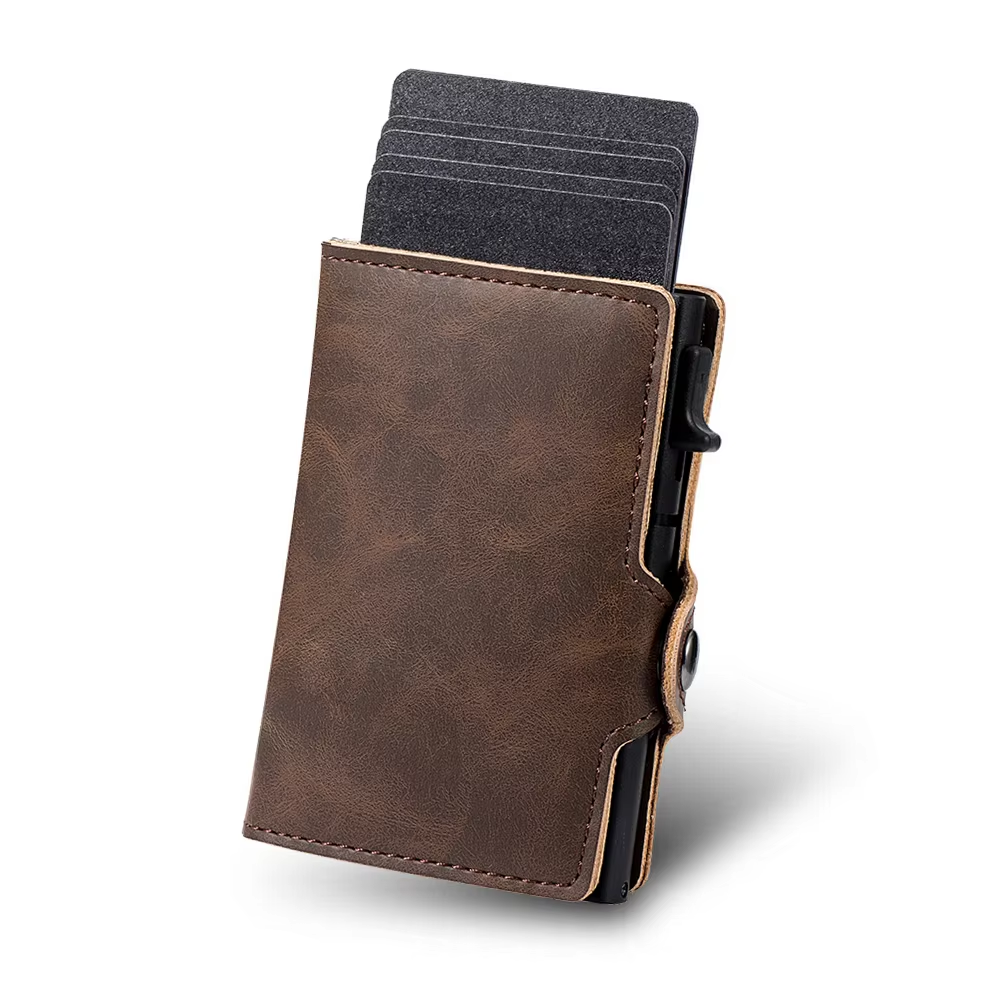
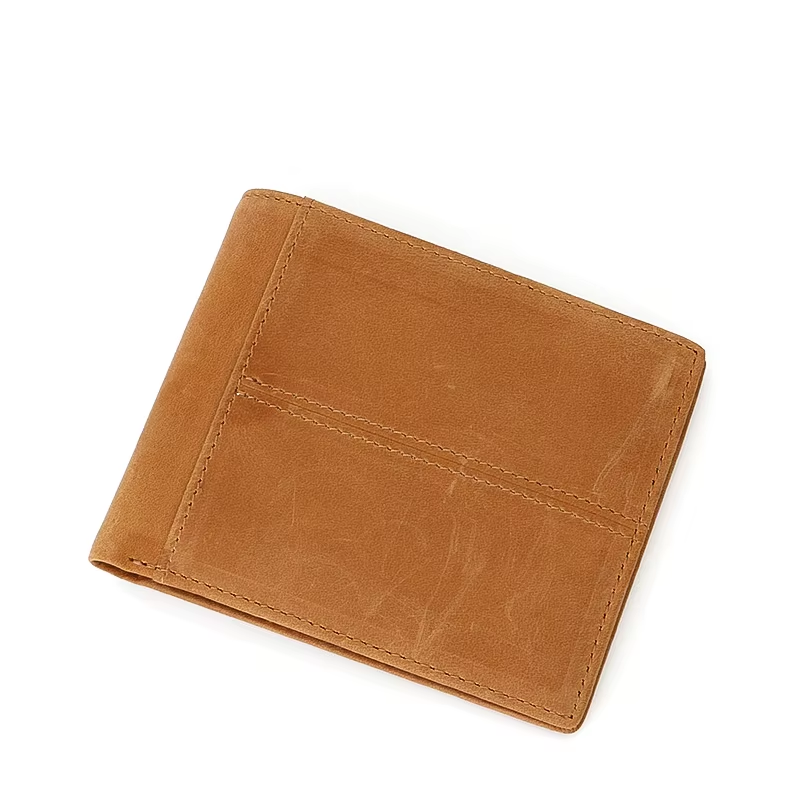
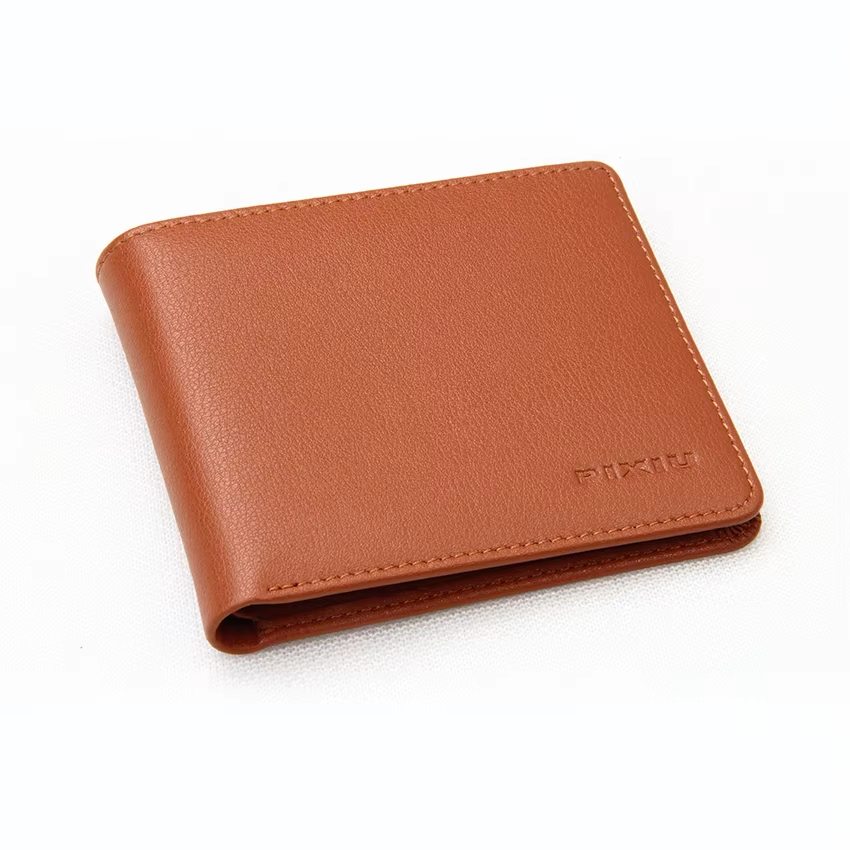
Ready to source your custom leather wallets?
Share the wallet format, leather specification, layout, quantity, branding, packaging, and target date so we can identify the next step.
Get a Custom QuoteSources and standards
- ISO 2859-1:2026 — Sampling procedures for inspection by attributes · International Organization for Standardization
- ISO 15115:2019 — Leather vocabulary · International Organization for Standardization
- Leather Manufacturer Standard · Leather Working Group
- Incoterms rules · International Chamber of Commerce